
UV floor coatings VS Epoxy durability
Independent lab tests reveal UV-cured floor coatings outperform traditional epoxy in scratch resistance, chemical tolerance, and lifespan. See data-driven comparisons for commercial use cases.
Introduction
In warehouses, hospitals, and retail spaces, floor coatings face relentless abuse – forklifts, chemical spills, and foot traffic numbering in the thousands daily. For decades, epoxy resins dominated this sector, but UV-cured alternatives are now challenging the status quo. Rigorous testing by the Fraunhofer Institute (2023) shows UV coatings last 2-3x longer than epoxy under industrial stresses. Let’s dissect the data and real-world applications driving this shift.
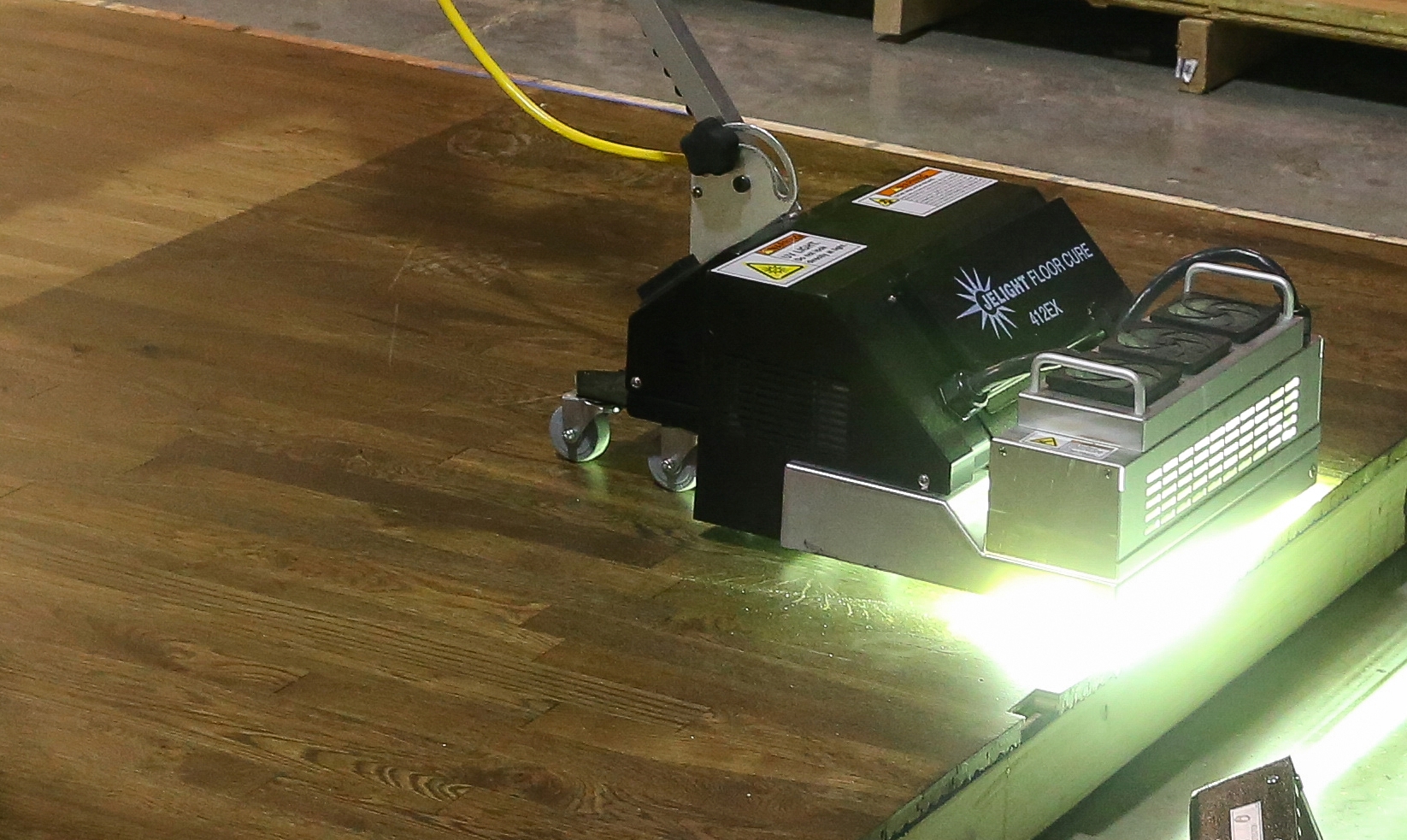
1. Scratch & Abrasion Resistance: Lab vs. Real World
Test Method: Taber Abraser (ASTM D4060) with CS-10 wheels, 1kg load, 1,000 cycles.

Key Insight: UV coatings’ rapid crosslinking creates a denser polymer network. In a Belgian auto parts factory, switching to UV reduced floor refinishing from annual to biennial cycles, cutting maintenance costs by €34,000/year.
2. Chemical Resistance: Acids, Oils & Solvents
Test Protocol: 24-hour immersion (ISO 2812-1):

Why It Matters: Epoxy’s amine hardeners create polar groups that attract corrosive agents. UV formulations avoid this via solvent-free curing. A Munich brewery reported zero staining after 18 months of malt acid exposure on UV-coated floors.
3. Installation & Downtime Costs
Commercial Gym Case Study:
- Epoxy: 7-day process (grinding, 3 coats, 48h curing per layer).
- UV Coating: 1-day application (1 primer + UV topcoat cured in 20s per section).

Note: UV’s instant curing allows section-by-section repairs without full shutdowns.
4. Long-Term Cost Breakdown (10-Year Span)
Assumptions: 5,000 m² facility, moderate traffic.
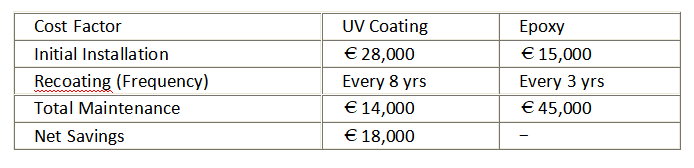
Source: Facility Management Europe, 2024
5. Limitations: Where Epoxy Still Wins
- Uneven Subfloors: UV requires laser-leveled surfaces (tolerance <2mm/m), while epoxy can fill 5mm cracks.
- Extreme Heat: Epoxy withstands 120°C+ (e.g., foundries); UV softens above 80°C.
- DIY Feasibility: UV demands €20,000+ LED equipment vs. epoxy’s roller application.
Conclusion
For high-traffic commercial/industrial spaces prioritizing lifespan and operational continuity, UV coatings deliver ROI within 2-3 years despite higher upfront costs. Epoxy remains viable for irregular substrates or budget-constrained projects. Hybrid systems (epoxy base + UV topcoat) now emerging may redefine future standards.
#UV floor coating durability test #epoxy vs UV flooring cost #chemical resistant floor coatings #UVCoating #FloorCoating #UVResin #UVFlooring #CuredByUV #IndustrialCoatings



Contact Us